Wagler’s Pit Viper
Stillness as Strategy
A quiet encounter with a pit viper in Sentosa Janda Baik.There are animals that announce themselves — with sound, movement, or menace.
Wagler’s pit viper does none of that.
It waits.
Draped across a branch, its colours dissolve into pattern rather than presence.
Many people walk past it without ever knowing.
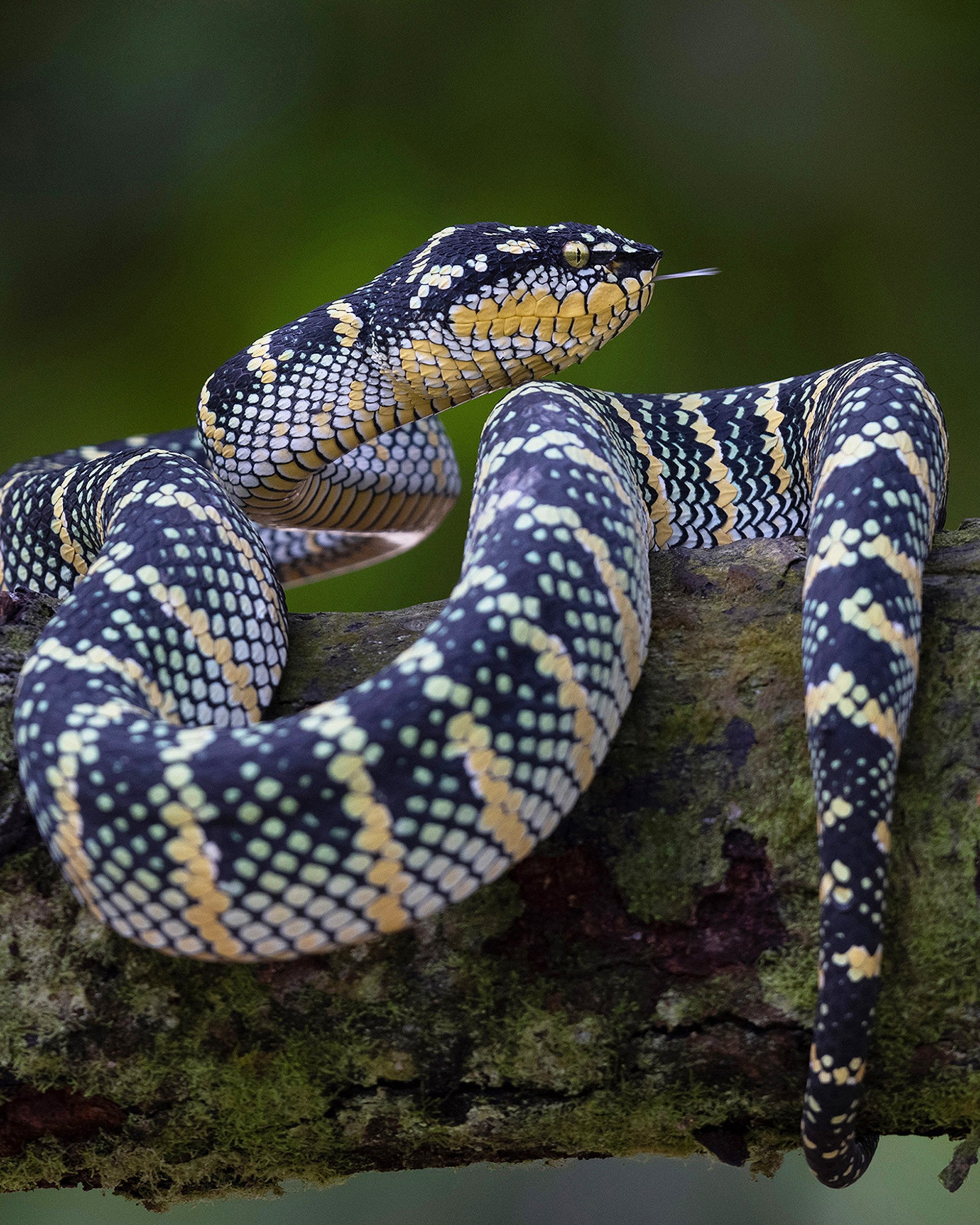
Wagler’s pit viper (Tropidolaemus wagleri) is often described as aggressive or dangerous. In truth, it is neither. What it is — is patient. This snake has evolved not for pursuit, but for ambush. Its world is measured in hours, not seconds.
It does not chase prey.
It allows prey to come to it.
The stillness is not hesitation.
It is strategy.
The species is sexually dimorphic — a technical term that feels inadequate when you see it firsthand. Females are bold, heavy-bodied, clad in high-contrast black, yellow, and white. Males are slimmer, greener, and far more easily overlooked.
Two different visual languages.
One species.
Both rely on the same principle: remain unseen.
The pit viper’s most misunderstood feature is the heat-sensing pit that gives the group its name. Located between the eye and nostril, it allows the snake to detect warm-blooded prey in complete darkness. This is not aggression. It is precision.
Evolution has taught this animal not to waste energy.
In a forest where every movement costs something, stillness is efficiency.
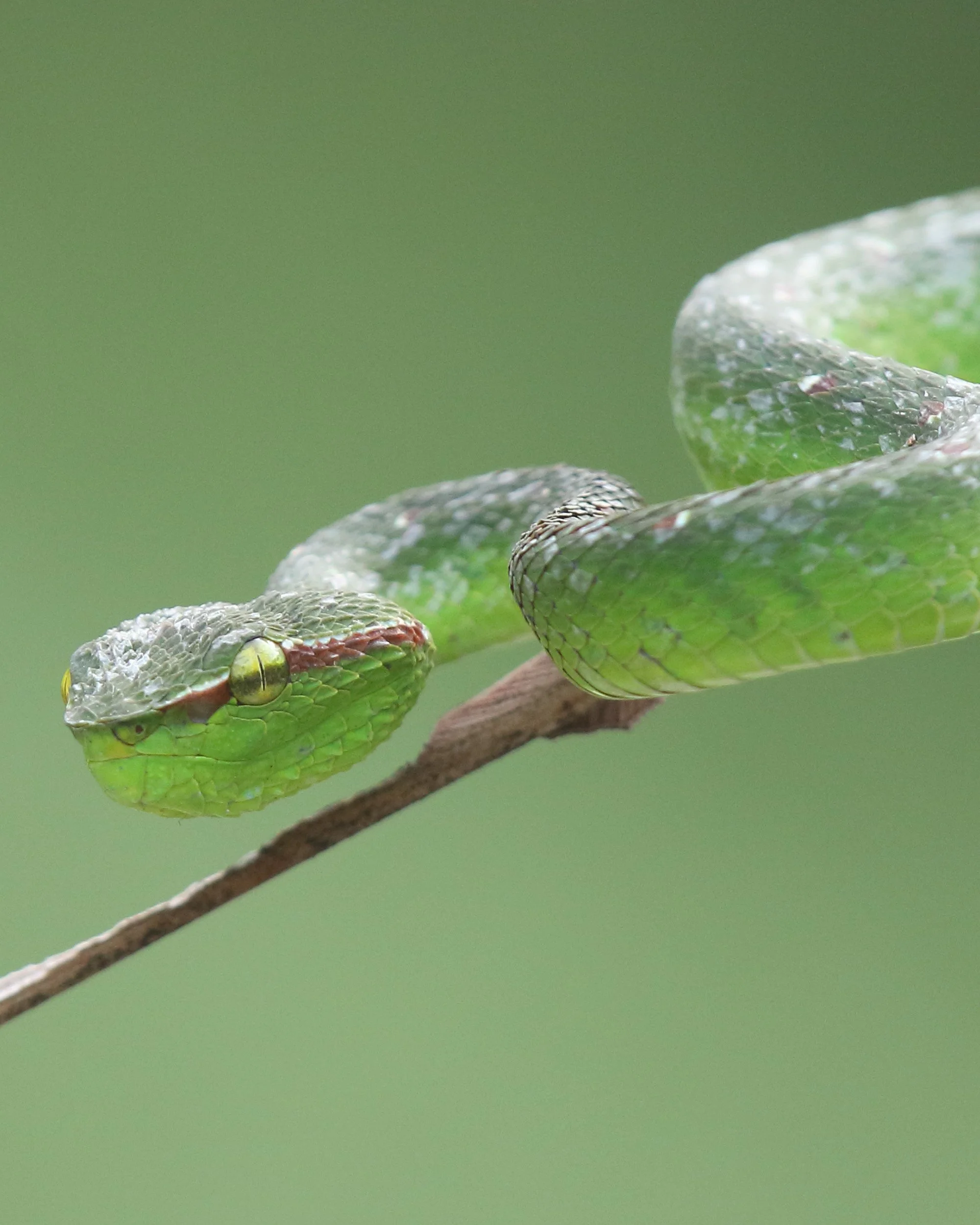
Photographing Wagler’s pit viper demands the same discipline it practices. There is no point rushing. No need to provoke. The snake will not perform for you.
You wait.
You watch the tongue flick — brief, deliberate.
You notice the eye: calm, unreadable, ancient.
The moment, when it comes, is quiet.
Most encounters end the same way — the snake remains, and the human leaves. No drama. No strike. Just two species sharing the same space for a brief, respectful moment.
Wagler’s pit viper does not want attention.
It has survived by avoiding it.
And perhaps that is the lesson it offers so effortlessly:
Not everything powerful needs to move.
Notes
Species: Tropidolaemus wagleri
Common names: Wagler’s pit viper, Temple pit viper
Distribution: Southern Thailand, Peninsular Malaysia, Sumatra, Borneo
Behavior: Arboreal, nocturnal, ambush predator
